Scooter vs Motorcycle Licence in BC: Which Do You Need?
From the low-hum of a scooter zipping through a residential street to the roar of a motorcycle on the Sea-to-Sky Highway, two-wheeled vehicles offer a unique way to get around British Columbia. With the growing popularity of both gas-powered and electric options, it’s not always clear which licence you need to ride legally. The answer depends on what you’re riding, so let’s break down the rules for each category.
The Gasoline-Powered World
When it comes to 2-wheeled gas-powered vehicles, the key distinction is typically engine size and speed.

The Moped and Scooter Distinction
A vehicle with a gasoline engine of 50 cubic centimetres (cc) or less is classified as a “limited-speed motorcycle” in British Columbia. This classification also requires the vehicle to have a maximum attainable speed of 70 kilometres per hour, without the need for clutching or shifting after the drive system is engaged. These vehicles must also weigh less than 95 kilograms (excluding fuel and batteries) and must have wheels with a 254mm diameter or more. If the vehicle meets these criteria, you likely do not need a motorcycle licence to ride it. A standard class 5 (full-privilege) or class 7 (learner/novice) driver’s licence is all that is required. These low-powered vehicles are ideal for short trips and local commuting in places like Chilliwack. Road or highway use of these vehicles may be restricted, depending on the speed of your moped or scooter, so check with ICBC or your local police for specifics on where you can ride in your local area.
The Motorcycle World
Any gas-powered two-wheeled vehicle with an engine larger than 50cc is considered a motorcycle, regardless of its style or design. This includes larger scooters often called “maxi-scooters.” To ride one of these vehicles, you must obtain a specialized class 6 or class 8 motorcycle licence. This licence is distinct from a car licence and requires its own process of tests and training.
Two-Wheeled Electric Vehicles
The rules for electric-powered two-wheelers are typically based on power output and speed, rather than engine displacement.
Electric Bikes (e-Bikes)
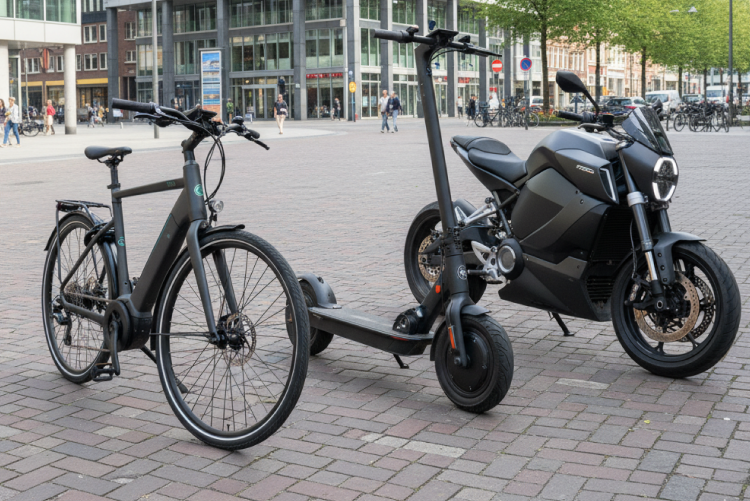
An e-bike, legally known as a “motor-assisted cycle,” is a two- or three-wheeled vehicle with pedals and an electric motor. There are 2 classes of e-bikes in British Columbia – the standard e-bike and the light e-bike, and to be operated on public roads and without a licence, registration or insurance, each must meet specific criteria.
Standard e-bike:
• Continuous power output from the motor cannot exceed 500 watts
• Maximum speed of 32 km/h
• Minimum rider age of 16 years old
• Must have pedals (or hand cranks) to propel the bike wither the motor is engaged or not
• Safety features to stop the motor propelling the bike
• Batteries and motors that are securely fastened to the bike with electrical terminals insulated and covered
• Wheels with a minimum diameter of 350mm
• A braking system that can quickly stop the e-bike
Light e-bike:
• Continuous power output from the motor cannot exceed 250 watts
• Maximum speed of 25 km/h
• Minimum rider age of 14 years old
• Must have pedals (or hand cranks) to propel the bike whether the motor is engaged or not
• Safety features to stop the motor propelling the bike
• Batteries and motors that are securely fastened to the bike with electrical terminals insulated and covered
• Wheels with a minimum diameter of 350mm
• A braking system that can quickly stop the e-bike
Electric Scooters (e-Scooters)
In British Columbia, e-scooters (also referred to as electric kick scooters) are currently governed by a provincial pilot project. In communities participating in the program, e-scooters are generally permitted on certain roads and bike lanes. To be considered part of the pilot, an e-scooter must have:
• A continuous power output of no more than 500 watts
• A maximum speed of 25 km/h
• A braking system to stop the device within 7.5 meters when travelling at max speed
• Handlebars for steering with a platform for standing (but not for sitting)
• Wheels in the front or back that are no more than 430mm in diameter
• A bell or a horn to sound when passing pedestrians and other road users
• Front and rear lights that must be on between sunset and sunrise (lights may also be worn by the rider)
• A weight of less than 45kg including the motors and batteries
As with e-bikes, a driver’s licence, registration, or insurance is not required, but riders must be at least 16 years old and wear a helmet.
Electric Motorcycles
If an electric two-wheeled vehicle exceeds the power or speed limits set for e-bikes and e-scooters, it is classified as a motorcycle. This means it requires a class 6 motorcycle licence, as well as vehicle registration and insurance, just like a gas-powered motorcycle.
The Path to a Motorcycle Licence (Class 6 and 8)
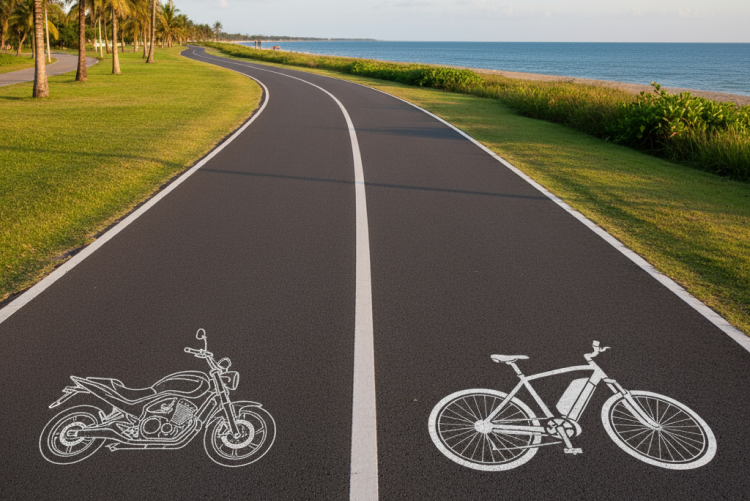
If you’ve decided a motorcycle is right for you, you’ll need to get licenced! This process is the same whether your motorcycle is powered by gas or electricity. There are two entry points to the program:
Class 6L Learner’s Licence: This is for riders who already hold a full class 5 or higher driver’s licence.
Class 8L Learner’s Licence: This is for riders who are still in the class 7 (learner/novice) stage of the passenger vehicle graduated licensing program.
The first step to getting either licence is to pass a written knowledge test. With a learner’s licence, you will have key restrictions to keep you safe:
● You must ride within sight of a qualified supervisor who holds a full class 6 licence.
● Your speed must not exceed 60 km/h.
● You may only ride during daylight hours (from sunrise to sunset).
● No passengers are permitted.
● Riders with an 8L must display an L sign
The next step is to pass a Motorcycle Skills Test. This is a closed-course test that assesses your ability to handle the vehicle at low speeds. Passing this test removes the supervision and speed restrictions, allowing you to ride alone and ride faster.
The final stage is the road test. If you started with a class 6L, upon passing the road tests , you will receive your full privilege class 6 motorcycle licence with no restrictions. For those who started with a class 8L, this process takes longer as you must also pass a class 8 road test and then spend a minimum period of time in the class 8 novice stage (with restrictions) before you are eligible for the final class 6 test and a full privilege class 6 motorcycle licence.
Making Your Choice
Choosing the right two-wheeled vehicle starts with understanding its legal classification and your riding goals.
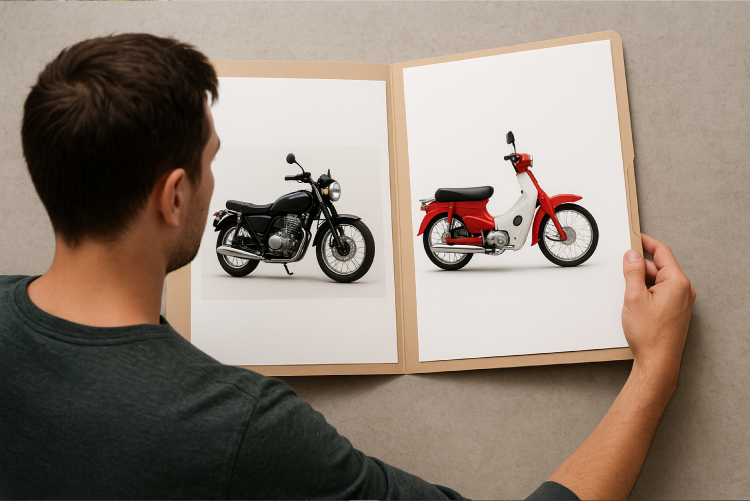
For city commuting and local errands: Consider a gas-powered limited-speed motorcycle (moped) or an e-bike. Both are practical, and their lower power and speed ratings mean you won’t need a specialized motorcycle licence.
For travel beyond city limits: A gas or electric motorcycle is the right choice. While they require a significant licensing process, it gives you the freedom to travel at highway speeds and ride on a much wider variety of roads.
For a convenient, no-licence ride: E-bikes and e-scooters offer a great way to get around without the need for additional licensing, but be mindful of their limitations, including their top speed and where you can legally ride them.
–
Ultimately, the key to staying safe and legal on BC’s roads is to understand the rules that apply to your specific vehicle. By paying attention to factors like engine size, power output, and speed, you can make an informed decision and ensure you have the correct licence for your chosen ride.
Want to learn more? Check out our other related blogs for more advice, including Valley’s Picks: Motorcycles for New Riders and Motorcycle Riding Tips for Beginners.
Related Articles
Safe Driving Tips for Seniors
Ready to keep your independence on the road? Discover the defensive driving habits that keep BC seniors safe behind the wheel. Read on to stay informed!
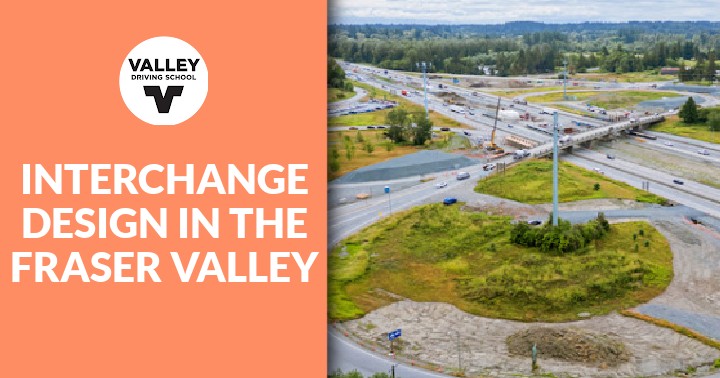
Interchange Design in the Fraser Valley
We explore the various interchange design types that define our landscape like the traditional Cloverleaf, modern Diverging Diamond, and how they impact road safety across BC.
How to Avoid Common Causes of Car Accidents
Learn the most common causes of car accidents and how to prevent them with defensive driving habits, intersection scanning, and distraction-free routines.