
Interchange Design in the Fraser Valley
Imagine you are driving along Highway 1 through the Fraser Valley, the rhythm of the road steady until you approach a sprawling complex of concrete and asphalt. These structures, known as interchanges, are far more than simple ramps: they are the invisible hands of highway engineering that keep people and goods moving near and far. Whether you are commuting through Burnaby or heading home toward the mountains in Chilliwack, these designs dictate how quickly you reach your destination and, more importantly, how safely you get there.
In this post, we will explore the various interchange design types that define our landscape. We will look at traditional layouts like the Cloverleaf, modern innovations like the Diverging Diamond, and how these choices impact road safety and transport planning across British Columbia. By understanding the civil infrastructure and traffic flow logic behind these designs, you can navigate even the most complex junctions with confidence.
What is a Cloverleaf Interchange?
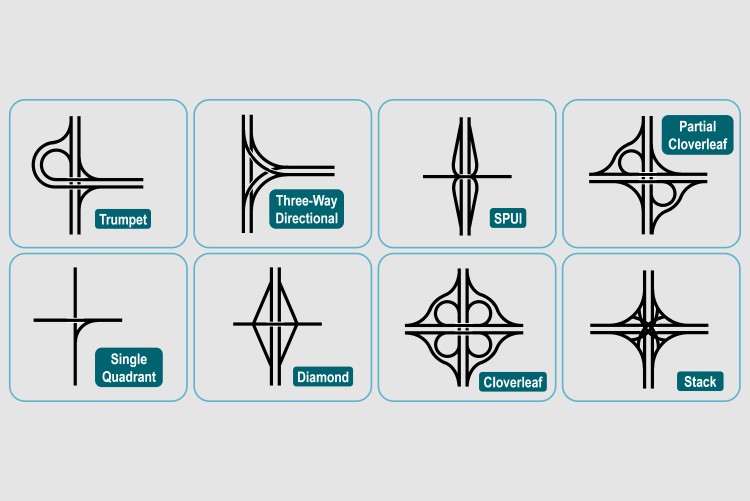
A Cloverleaf Interchange is a design used where two busy highways cross, allowing drivers to change directions without needing to stop at a signal. It is easily identified by its four circular loop ramps that resemble a four-leaf clover from the air, providing a continuous path for vehicles turning left onto the intersecting highway.
While these were once the standard for high-speed connections, the cloverleaf design is less and less common in modern construction due to “weaving”. Weaving occurs when vehicles entering the highway must cross paths with those trying to exit in a very short distance, which creates a high potential for side-swipe collisions. In Burnaby, drivers often encounter these tight maneuvers near the Gaglardi Way and Highway 1 area, where heavy traffic volumes make the limited space for merging a significant factor in daily commutes.
Why is the Diamond Interchange so common?
The Diamond Interchange is one of the most widely used designs because it requires relatively little land and is cost-effective to build. It features four straight ramps that form a diamond shape when viewed from above, with traffic exiting and entering the highway at signalized intersections on the crossroad.
These designs are highly efficient for moderate traffic volumes because they provide controlled access points for drivers. However, the use of traffic lights on the overpasses can lead to congestion or rear-end collisions during peak hours if the signals are not timed perfectly. You can find a classic example of this configuration at the Whatcom Road interchange in Abbotsford, which serves as a major arterial point for local residents and commuters heading east.
How does a Single Point Urban Interchange (SPUI) improve efficiency?
A Single Point Urban Interchange (SPUI) improves traffic flow by consolidating all left turning movements into one central signalized intersection located directly on the bridge overpass or underpass. Unlike a standard Diamond Interchange, which has two separate sets of lights on either side of the bridge, the SPUI allows all ramps to meet at a single point to move large volumes of traffic through a single light cycle.
This layout is particularly useful in urban areas with limited land because it creates a smaller footprint than traditional designs while reducing the number of conflict points where accidents typically occur. The 200th Street interchange in Langley is a prominent example of this in the Fraser Valley. By using a single signal to manage both the highway ramps and the arterial road, the design handles the heavy commercial and commuter traffic moving between Highway 1 and the busy Willoughby area more effectively than a traditional four way stop.
Why is the Diverging Diamond Interchange the future of British Columbia roadways?
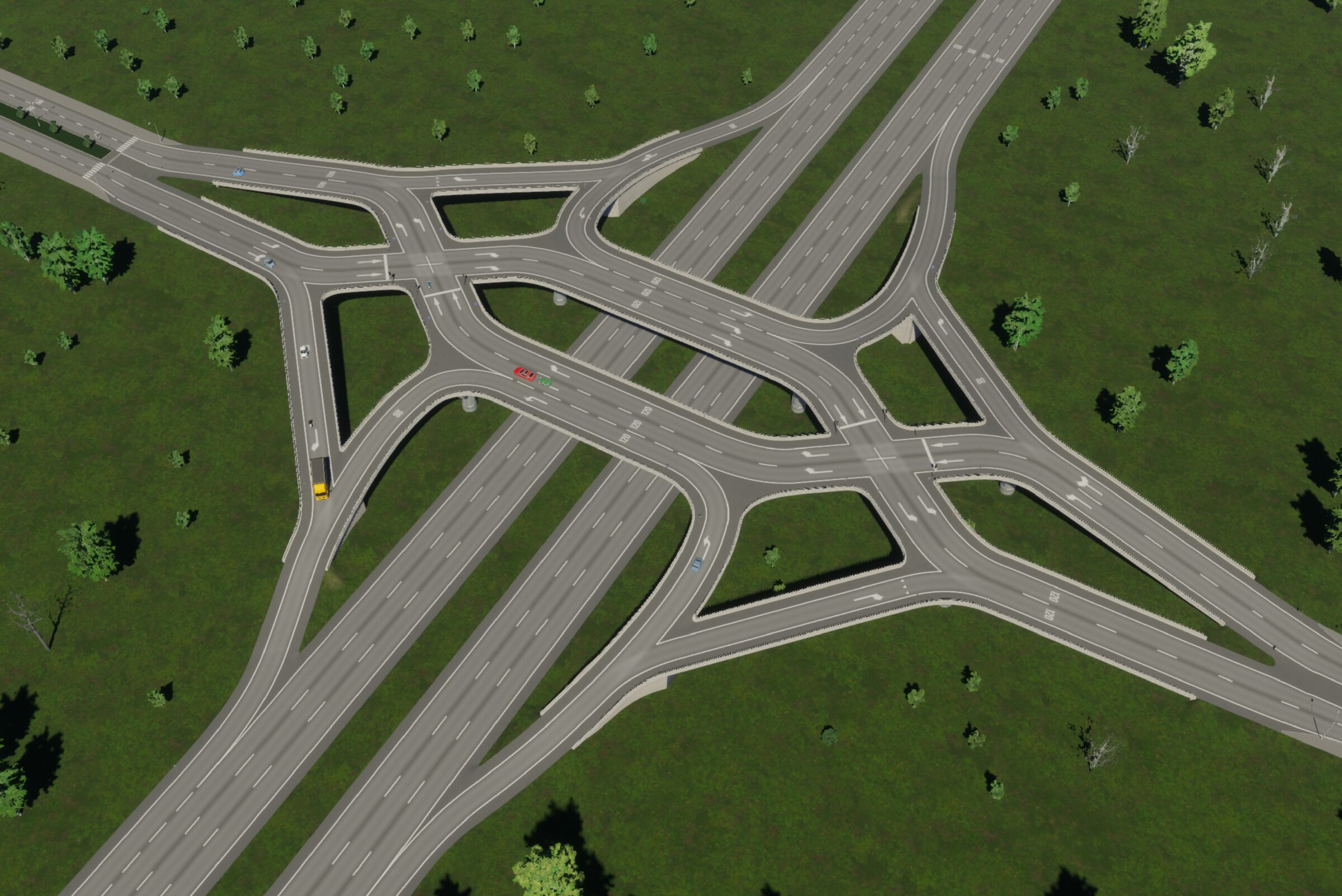
The Diverging Diamond Interchange (DDI) is a modern design where the two directions of traffic on the crossroad briefly shift to the opposite side of the road. This criss-cross pattern allows vehicles to turn left onto highway on-ramps without ever having to clear a lane of oncoming traffic, which significantly reduces the risk of high-impact collisions.
Safety is the primary driver for this design, as it provides fewer conflict points: only 14 compared to the 26 found in traditional layouts. British Columbia is currently embracing this innovation with the 264th Street Interchange project in Langley, which is under construction and will be the first DDI in the province. Anticipated for completion in 2027, this new structure is a central part of the highway widening program designed to improve safety for the thousands of drivers who pass through daily.
Building on this momentum, the Sumas Way (Highway 11) interchange in Abbotsford is also undergoing a massive transformation. Construction on the replacement of this interchange officially began in January 2026 to accommodate the widening of Highway 1 and to better manage the heavy traffic volumes heading toward the Canada-U.S. border. This $242 million project is part of a broader effort to modernize civil infrastructure and improve transport planning throughout the region, with the overall Phase 3B upgrades expected to be complete by 2031.
Which interchange designs are the safest for drivers?
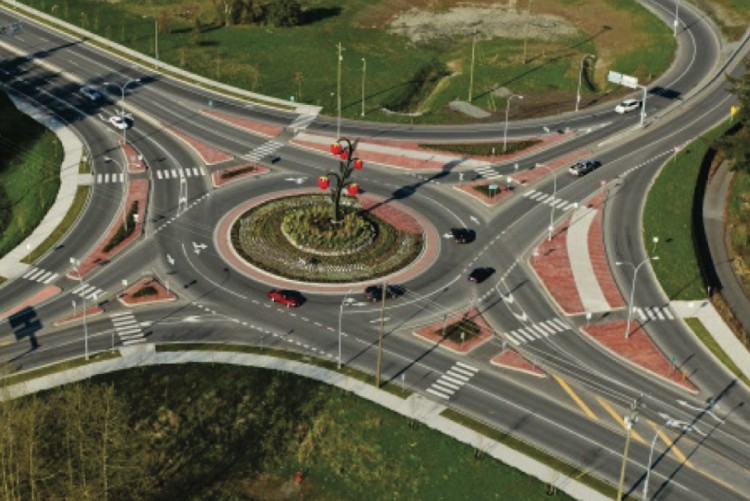
Modern engineering identifies the Diverging Diamond Interchange (DDI) and roundabouts as the safest configurations because they reduce the number of conflict points where vehicles might collide. By eliminating left turns across oncoming traffic and lowering travel speeds, these designs prioritize road safety and significantly decrease the severity of potential accidents.
When evaluating infrastructure, engineers look for ways to make the driving experience as predictable as possible. Traditional layouts like the Cloverleaf often lead to weaving conflicts, whereas modern “full-movement” designs aim to separate these flows. The 216th Street interchange in Langley was built with these modern safety standards in mind, providing clear sightlines and dedicated lanes to reduce confusion for drivers entering and exiting the highway.
While no design can eliminate human error entirely, modern planning focuses on “forgiving” infrastructure. By using physical barriers to separate opposing traffic and clear signage to guide lane choice, the Ministry of Transportation and Infrastructure ensures that a minor mistake does not result in a serious incident. These improvements are a core part of how the Ministry is working to manage traffic in high-density corridors between Vancouver and the Fraser Valley.
How do regional preferences vary in BC and beyond?
Interchange selection is a balance of geography, funding, and local traffic patterns. In British Columbia, the province often favors designs that accommodate our unique mountain and valley terrain while prioritizing the safety of a growing population. While California might opt for massive “Stack” interchanges like the “Spaghetti Bowl” in Los Angeles to handle extreme density, BC is moving toward designs that integrate vehicle traffic with transit and cycling.
Canada generally follows international standards but adapts them for our climate and regional needs. For instance, the Yale Road and Evans Road area in Chilliwack utilizes a combination of designs and roundabouts to manage the transition from rural highway speeds to urban commercial zones. From the “Magic Roundabout” in the United Kingdom to the emerging DDIs in the Fraser Valley, the goal remains the same: creating a network that is intuitive for the driver and efficient for the community.
–
The evolution of interchange design reflects a growing commitment to smarter, safer roadways. As our province continues to grow, these intricate puzzles of concrete will play an even larger role in our daily lives. By staying informed about how these junctions function, we can all contribute to a smoother and more predictable journey for everyone on the road.
If you would like to broaden your understanding of the road rules that keep our community moving, we invite you to explore our other guides: 4 Types of Intersections and How to Navigate Them and Tips for Safely Navigating Intersections.

Related Articles

Safe Driving Tips for Seniors
Ready to keep your independence on the road? Discover the defensive driving habits that keep BC seniors safe behind the wheel. Read on to stay informed!

How to Avoid Common Causes of Car Accidents
Learn the most common causes of car accidents and how to prevent them with defensive driving habits, intersection scanning, and distraction-free routines.

How to Manage Driver Fatigue
Spot early signs of driver fatigue and reduce drowsy driving risk with smart trip planning, rest breaks, and pull-over steps when sleepiness hits.