
Navigating Foggy Conditions in BC
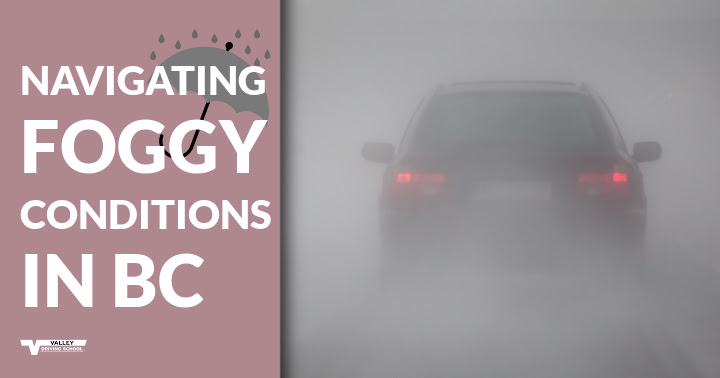
Driving in the Lower Mainland often means adapting to rapidly changing weather, and there are few conditions that challenge visibility as much as fog does. Whether you are behind the wheel of a passenger vehicle, managing a commercial truck, or operating a bus, understanding how to navigate thick, soupy fog is key to safety. Weather conditions like fog may require a specific shift in focus and technique for all drivers, from new drivers preparing for their road test to experienced individuals. Fog frequently blankets our coastal regions, valleys, and mountainous areas, particularly near water and during cooler months.
We have some practical strategies for navigating these conditions, with tips for anyone driving in the region.
How should I use my headlights in foggy conditions?
An important step in maintaining visibility in the fog is managing your vehicle’s lights. When visibility is reduced, using your exterior lights is both helpful and mandatory for safety.

Headlights vs. High Beams
While it may seem counterintuitive to avoid using your brightest lights, you should resist the urge to use your high beams. High beams cause the light to reflect directly off the dense fog droplets and back toward your vehicle, creating an intense glare that can drastically reduce your ability to see. Instead, use your regular low-beam headlights as the light from the low-beams is directed downward and forward, minimizing reflection and helping other drivers see you.
Are Fog Lights Beneficial?
Fog lights are designed to be used in conjunction with your low beams. Not all vehicles have them equipped, but if your vehicle does you will find the fog lights mounted low on the front of the vehicle. This placement allows the beam to travel under the densest part of the fog layer, closer to the pavement, which helps illuminate the immediate road area without causing the reflective glare associated with high beams. For anyone travelling in areas like the Fraser Valley where fog is common, having and knowing how to use fog lights is a simple way to increase safety. They are a valuable tool for any driver, especially those pulling a trailer, where maximizing visibility around the entire vehicle is important.
How can I increase my safety in foggy conditions?
Safe driving in fog conditions is about preparation and by maintaining your vehicle and making appropriate mental adjustments, you can prepare for the hazards ahead.

Wipers and Windshield Clarity
Fog is a ground-level cloud cover, saturated with moisture that collects on your windshield and it can quickly create a slick film, potentially blurring your view in already poor visibility conditions. Ensure your windshield wipers are in good condition and functioning properly before you head out and use them consistently to keep the glass clear. If you experience condensation on the inside of your windshield, use the defroster and air conditioning system to clear the air inside of the car. Ensure all your windows are clear of condensation before driving and if your windows start to fog while driving, it may be best to pull over until you have full visibility!
Reduce Your Speed
If you’re driving through foggy conditions with limited visibility, this can affect your response time. Lowering your driving speed can help to compensate for this change in response time. For example, when driving on a highway with a 100 km/h limit and a reduced visibility of 30 meters ahead, chances are high that hazards will appear unexpectedly and you may not have enough time to respond accordingly.
You should decrease your speed enough that will allow you to stop safely within the distance you can see ahead. This may sometimes mean travelling below the posted speed limit. If you find yourself travelling well below the speed limit, your hazard lights should be used to alert other drivers.
Should I drive defensively in foggy conditions?
Defensive driving is an important skill to use while driving in low visibility or foggy conditions. Defensive driving skills such as space margins should be heavily considered while driving in these hazardous conditions.
Increase Your Following Distance
Maintaining a safe gap is a good practice, and it is especially important while driving in fog. The standard practice of a two second following distance is generally inadequate when visibility is impaired. Consider increasing your following distance to four or more seconds, especially when driving a larger vehicle that requires a longer stopping distance. Commercial drivers, including those driving tractor trailers, trucks, or buses, know that reduced visibility demands more stopping space due to the size and weight of their rig.

Rely on Roadside Guides
When thick fog makes it difficult to see the pavement, let the road itself guide you. Pay close attention to the painted road lines – the solid or dashed lines on the edge and center of the road – to help you stay centered in your lane. The solid white lines that often line roadways in BC are named “fog lines” for this particular reason! Additionally, roadside reflectors (often called ‘cat’s eyes’ or Botts’ dots) can be very helpful. These small reflective markers on the road surface or posts along the edge of the road provide illuminated cues that guide your path. Following these guides ensures you maintain your trajectory and don’t drift into oncoming traffic or onto the shoulder.
Avoid Unnecessary Stops
There are times when the fog becomes so dense, often referred to as ‘pea-soup’ fog, that visibility drops to near zero, making it genuinely unsafe to proceed. In this instance, your safest option may be to pull over.
Stopping unexpectedly in heavy fog can create a significant collision risk, as the driver behind you may not see your tail lights until it is too late. If you must slow down or come to a full stop, do so gradually, and avoid slamming on the brakes. If coming to a full stop due to an emergency situation, be sure to pull over and stop your vehicle as fully off the road as possible, without putting yourself at risk of soft shoulders or ditches. Once safely off the roadway, turn off your headlights, and turn on the hazard lights. This dual action is important: you want your hazard lights flashing so other drivers know where you are, but you do not want your headlights on, as this could lead a confused driver behind you mistaking your stopped vehicle for a moving lane of traffic. Wait patiently for the visibility to improve before continuing your journey.
Can I drive a large vehicle in foggy conditions?

Operating a large truck or bus in fog presents an amplified set of challenges compared to a passenger vehicle. The sheer length and weight of commercial or recreational vehicles, particularly those requiring a trailer endorsement, means that stopping distances are longer, regardless of whether the vehicle uses air brakes or hydraulic brakes.
The reduced visibility from fog necessitates an even more significant reduction in speed for a commercial vehicle. Furthermore, the driver’s cab is often much higher than a passenger vehicle, meaning the low-mounted fog lights on a truck may not be as effective at driver height. Drivers of large vehicles should be especially vigilant about using their mirrors and monitoring all corners of the vehicle to ensure safe lane changes and maneuvers, which can be difficult with the added foggy conditions. These circumstances emphasize why proper training for new drivers and consistent refresher training for senior drivers is so important.
–
Successfully driving in fog requires extra caution, patience, and attention to detail. By reducing your speed, properly utilizing your lighting systems, and relying on the visual guides provided by the road, you can navigate even the densest mist with increased confidence. Safe driving is about preparedness, vigilance, and making informed decisions for yourself and everyone else on the road.
As you continue your journey toward becoming a safe and skilled driver, we encourage you to check out more of our practical advice! For a deeper dive into fog lights, read our Drivers Guide to Fog Lights, or explore strategies for truck and bus operators in our guide to Navigating Weather Challenges in Commercial Driving.

Related Articles
Safe Driving Tips for Seniors
Ready to keep your independence on the road? Discover the defensive driving habits that keep BC seniors safe behind the wheel. Read on to stay informed!
Interchange Design in the Fraser Valley
We explore the various interchange design types that define our landscape like the traditional Cloverleaf, modern Diverging Diamond, and how they impact road safety across BC.
How to Avoid Common Causes of Car Accidents
Learn the most common causes of car accidents and how to prevent them with defensive driving habits, intersection scanning, and distraction-free routines.